A Complete Attendant to Nepal's Hidden 7000-Meter Peak
 byBy Suman Neupane
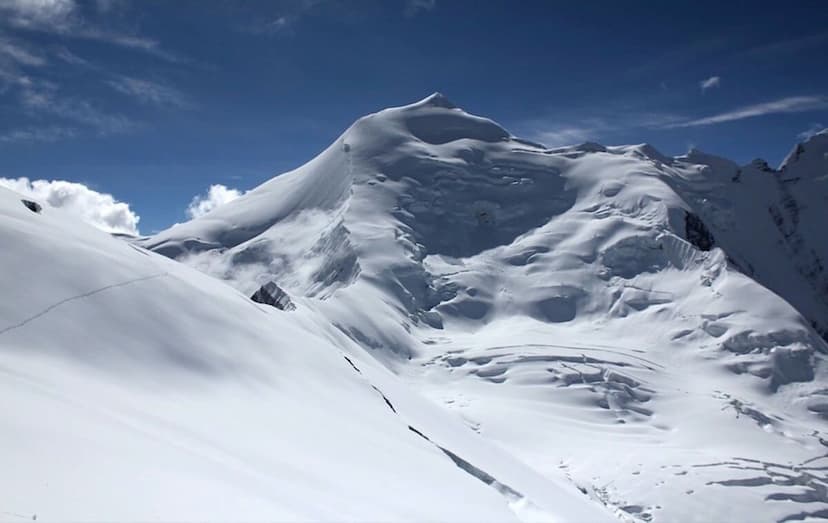
The Himlung Himal Expedition (7,126m) is one of Nepal's most valuable 7000-meter climbing adventures. Located in the isolated Nar-Phu Valley, close to the Tibetan border, Himlung Himal offers climbers an excellent opportunity to gain high-altitude mountaineering experience before attempting more challenging 8000-meter peaks. With relatively moderate technical difficulty, breathtaking Himalayan scenery, and fewer crowds than many famous expedition peaks, Himlung Himal has become gradually popular among climbers from around the world.
Where is Himlung Himal?
Himlung Himal lies in the Manang District of northern Nepal, inside the remote Nar and Phu Valleys. The mountain was first successfully climbed in 1992 by a Japanese expedition. Since then, it has become one of Nepal's preferred training peaks for mountaineers preparing for expeditions such as Everest, Cho Oyu, or Manaslu, Dhaulagiri. The journey to Himlung Himal combines cultural exploration with wasteland trekking. Climbers pass through outmoded Tibetan-influenced villages, ancient monasteries, deep river gorges, and high alpine landscapes before reaching the expedition's base camp.
How difficult is the Himlung Himal Expedition?
Himlung Himal is considered a moderately technical expedition. Although it is less demanding than many 8000-meter peaks, climbers should have prior experience with glacier travel, fixed ropes, crampons, ice axes, and ascending with mechanical ascenders. The route mainly follows snow slopes and glaciers with several steeper sections requiring fixed rope. While the technical climbing is wieldy, the greatest challenge comes from the high altitude. Proper acclimatization, physical fitness, and a slow ascent are essential for a successful and safe summit. Strong fortitude, basic mountaineering skills, and prior skill on peaks above 6000 meters are highly recommended.
Expedition Route and Camps
Most expeditions begin with a scenic drive from Kathmandu to Besisahar, followed by another drive toward Koto. From there, trekkers enter the beautiful Nar-Phu Valley. A typical itinerary includes:
a) Kathmandu Drive to Besisahar continues to Koto b) Trek to Meta c) Trek to Phu Village d) Acclimatization day in Phu e) Trek to Himlung Base Camp
From Base Camp, the expedition normally establishes three higher camps.
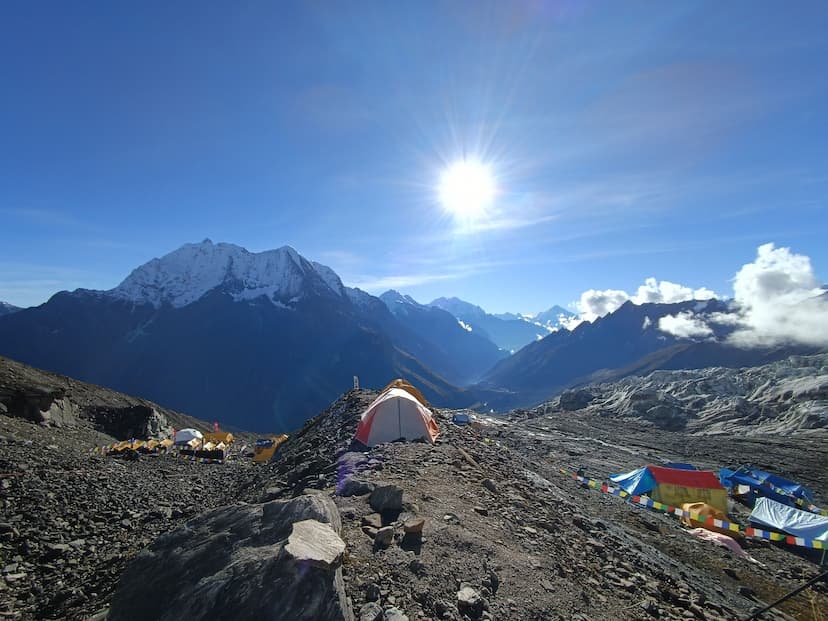
Base Camp (Approximately 4,900m)
Base Camp is comfortably situated on a verdant moraine with spectacular views of Himlung Himal. This is where climbers spend several days preparing equipment, steering glacier training, and acclimatizing before moving higher.
Camp I (Approximately 5,450m)
Camp I is located on a broad snowfield above the glacier. The route involves glacier travel with some crevasse crossings. Climbers usually spend one or two nights here during their acclimatization rotations.
Camp II (Approximately 6,000m)
Camp II sits on a protected snow plateau. This camp provides an excellent staging point for higher acclimatization and summit preparation. Climbers typically return to Base Camp after reaching Camp II before beginning their final summit push.
Camp III (Approximately 6,350m)
Camp III is established on an exposed ridge beneath the summit slopes. Weather conditions can be cold and windy, making proper equipment vital. Summit day usually begins around midnight or 1:00 a.m.
Summit Day
Summit day embroils a long climb over snow slopes and moderate ridges. The final ascent is physically demanding due to the thin air rather than technical climbing. On a clear day, climbers enjoy breathtaking views of Annapurna, Manaslu, Ganesh Himal, Tibet, and countless surrounding Himalayan peaks. After celebrating on the summit, climbers descend carefully back to Camp III or Camp II, depending on weather and team conditions.
Required Permits
Himlung Himal Climbing Permit issued by the Nepal Government. Nar-Phu Restricted Area Permit. Annapurna Conservation Area Permit (ACAP). Most expedition operators arrange all permits before the trip begins.
Transportation
The expedition generally starts with an overland journey from Kathmandu. Transportation typically includes: Private or tourist vehicle from Kathmandu to Besisahar. Four-wheel-drive Jeep from Besisahar to Koto. Return by the same route after the expedition. Some teams may also arrange helicopter transportation from Base Camp or nearby locations in case of emergencies or special logistical requirements.
Experience Required
Although Himlung Himal is considered one of Nepal's more accessible expedition peaks, it should not be underestimated. Climbers should have:
a) Excellent physical fitness. b) Previous trekking experience above 5000 meters. c) Basic glacier travel skills. d) Experience using crampons, harnesses, ice axes, and ascenders. e) Strong mental determination and teamwork. Previous ascents of peaks such as Island Peak, Mera Peak, Lobuche East, or other 6000-meter mountains provide valuable preparation.
Best Seasons
Spring (April–May): Stable weather, warmer temperatures, and generally good summit conditions.
Autumn (September–October): Clear skies, excellent mountain views, and lower snowfall after the monsoon. Winter expeditions are possible but require greater experience due to colder temperatures and harsher weather.
Why Choose Himlung Himal?
Himlung Himal offers an outstanding balance between adventure, technical climbing, and high-altitude experience. Likened to Nepal's more famous expedition peaks, it is less crowded while still providing the enthusiasm of climbing above 7000 meters.
The mixture of remote trekking, authentic Himalayan culture, professional expedition logistics, and remarkable summit views makes Himlung Himal an memorable mountaineering objective. Whether you are preparing for an 8000-meter expedition or seeking your first 7000-meter summit, Himlung Himal is one of Nepal's finest expedition choices. With experienced guides, proper acclimatization, quality equipment, and careful planning, the Himlung Himal Expedition can become one of the most rewarding achievements of your climbing career.
By Suman Nepane Team Leader from Asian Hiking Team Pvt. Ltd.